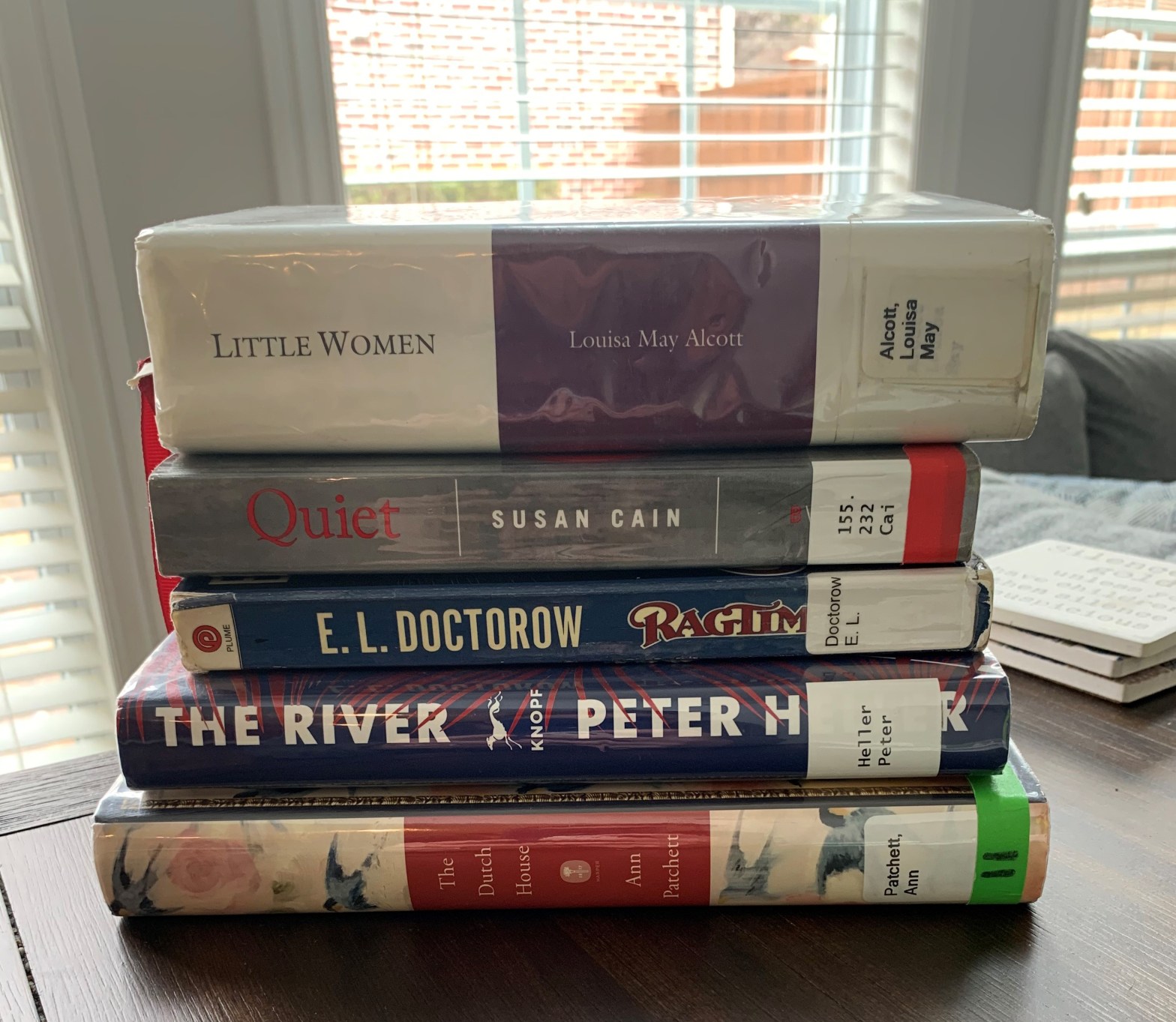
According to a survey by Pew Research, the typical American reads four books per year (that’s the median — the mean is 12 books, but that value is skewed by people who read a large number, so in this case the median is a better reflection of actual reading). By this measure, I read a lot:
- 2017: 42 books
- 2018: 50 books
- 2019: 52 books
- 2020: 64 books
- 2021 Goal: 60 books (ahead of schedule with 26 as of this post)
Let’s be clear: everyone wants different things out of their reading life. Not everyone wants to read 40, 50, 100 books per year, and that is perfectly fine. But from conversations with people, it seems there are many who wish they read more, even if that is simply starting to read for ten minutes a day. I’ve had a lot of people ask how I read so much, so this post is a compilation of advice. Many of the below tips can offer small incremental changes, so adopting even one can help.
Habits
Integrate Reading Into Your Daily Nighttime or Morning Rituals
A habit of reading makes reading automatic. I have always read in bed at night (and thankfully, married some one with the exact same habit!), so every single night, barring illness, I read before going to sleep. Sometimes it’s only 10 minutes, but usually it’s between 20 and 45 minutes. That adds up!
If bedtime doesn’t work for you, you could also make it a habit to read when you wake up. For example, make a commitment to read before scrolling on your phone. If you spend just 10 minutes reading each morning, that is over an hour a week. Bump it up to 20 minutes, and you’re at over two hours.
Read In The Margins Of Your Day
This is where my Kindle makes a big difference, but this shift is actionable even if you read physical books. (I read both types.) I frequently have my Kindle in my purse and make it a habit to read when I’m waiting someplace. Doctor’s appointment? Kindle. Waiting for a kid’s practice to finish up? Kindle. I’m definitely not perfect at this, but I make a conscious effort to choose the Kindle over my phone in these situations.
Don’t have a Kindle? You can do the same thing with a physical book (and I definitely have!) or an audiobook. Maybe it makes sense to leave a book in your car for this specific purpose.
Make a Plan
Know what you’re going to read next. I used to lack a plan and got out of my reading habits when I finished a book and had no clue what to pick up. Now I keep a stack of books (usually more than one stack) stashed so I can grab the next one that looks interesting. Here are some specific ideas:
- Make an actual list of books that you’re interested in reading. Put it in your planner, save it on your phone, hang it on the fridge–do whatever works for you. When you finish a book consult the list for what looks like a good next read. This is a great place to stash recommendations you hear from friends, TV, or from other sources. If you haven’t checked it out already, NPR’s “Book Concierge” is a fun resource with recommendations from 2013-20 across a number of genres.
- Check out (or buy) books in pairs (or more). Don’t grab a single book from the library–grab a stack! If you don’t finish some of them, no one’s going to come after you. Renew or return and check out again later. I’ve found having a wide selection helps in case Current Kate is not in the same mood that Past Kate was when she picked a particular book.
- Intentionally pair books with a similar theme or by the same author–a kind of “mini-capsule” reading practice.
- Start a series. This is a great tip if you are in a bit of a slump. Find a great series and start reading. I got through a tough year reading something like 13 books in Louise Penny’s Gamache series (I’ve read them all and consistently recommend them).
Stop Reading
How do you read more by not reading? If you don’t like a book, put it down. Choose something else. Few things are as demotivating when it comes to reading as forcing yourself to read something you are hating. Chances are you will slow down, or stop, and avoid it altogether. You’re an adult, there’s no test coming. Seriously. Put it down. Maybe the writing is terrible. Maybe the author killed off the dog. Maybe the book is just different from what you wanted. Maybe now isn’t the time for that particular book. I promise you, I probably abandon between two and five books a year.
Side Note: This unwillingness to put down a terrible book after reading a significant number of pages is related to the sunk cost fallacy. Learning how to recognize and defeat this tendency will change your life. In my book example, if you’ve read 100 pages of a book and figure out you hate it, the time you spent on that reading is already a sunk cost. You’re not getting it back. But many people feel like they have to finish it to somehow give that already-sunk time meaning. STOP. Your choice at page 101 is simple: do I want to continue spending time on something I hate, or do I want to free up that time to pursue/read something more enjoyable? Seriously, learn about the sunk cost fallacy.
Read More Than One Book At Once
Not at the exact same time, obviously. This strategy is one some people just reject outright. But it’s helpful for when one book is dragging or you need a change of pace. Maybe you’ve had a bad day and that excellent but slow-moving literary novel isn’t calling to you. I usually have at least two books going (sometimes 3 or 4) — I enjoy the flexibility. If you’ve never tried this strategy, here are ideas:
- Pick two very different books. If you read both fiction and nonfiction, choose one of each. If you only read one or the other, just make sure that the two books are obviously different from each other (e.g., different genres). Another easy way I keep them apart is to have one on my Kindle and one as a physical copy.
- It may help to assign your respective books slots. For example, nonfiction in the morning and fiction in the evening. Or one book during the day and the other only at night.
As an example, right now I’m reading three books: Wintering: The Power of Rest and Retreat in Difficult Times (nonfiction book about accepting sadness/difficulty during hard periods in life; by Katherine May), The Color Purple (winner of the 1983 Pulitzer Prize for Fiction; by Alice Walker), and Isaac’s Storm (nonfiction book about 1900 Galveston hurricane; by Erik Larson). Not going to confuse these three. I read them in a loose pattern. Isaac’s Storm would be my “main read” (eBook), The Color Purple is the book I’ve been reading during small moments in my day or waiting for appointments, etc. (eBook), and Wintering is one that I’m reading some evenings after I read some on the others (physical copy).
Choose Reading
At the end of the day, reading more is a choice. Time is finite. Choices must be made. You will have to give something up if you want to read more. For example:
- Watch less TV. If you watch TV every day, cut out a half hour. Or just give up one night for reading. It adds up.
- Scroll less. Really, we should probably all be spending less time on social media. Tell yourself you can scroll once you’ve read for ten minutes. Chances are, you’ll just keep reading. If not, at least you read for ten minutes!
- “Read” while driving. I’m not getting into the debate around if listening to audiobooks is “really” reading or not. To me, it’s an unimportant distinction for this purpose. For years I had a long commute (65 minutes, each way), which meant spending over 8 hours in my car just going to and from work four days each week. Audiobooks and podcasts saved me. Give it a try!
 Katherine Tuttle, Ph.D.